
What is a scalable business model?


A scalable business model is one in which revenue can grow substantially faster than costs, headcount and management attention. In a scalable model, doubling the customers does not require doubling the organisation; in an unscalable one, growth simply reproduces today's strain at larger size.
Scalability shows in identifiable properties:
Systematised operations: the business runs on documented processes rather than the memory and heroics of specific people
Leverage in delivery: offerings structured so that serving the next customer costs meaningfully less than serving the last, through productisation, standardisation or technology
Automated repetition: enquiry handling, follow-up, scheduling, documentation and reporting performed by systems and AI agents rather than consuming skilled hours
Channel leverage: growth carried by partners, distributors, franchisees, licensees, agents and resellers, rather than solely by owned headcount
Financial headroom: margins and cash cycles that fund growth rather than being consumed by it
Management by indicators: leadership steering through numbers and reviews rather than personal involvement in every transaction
Scalability matters doubly for companies with regional ambitions, because overseas expansion multiplies whatever the model already is: a scalable model extends across markets, while an unscalable one exports its bottlenecks.
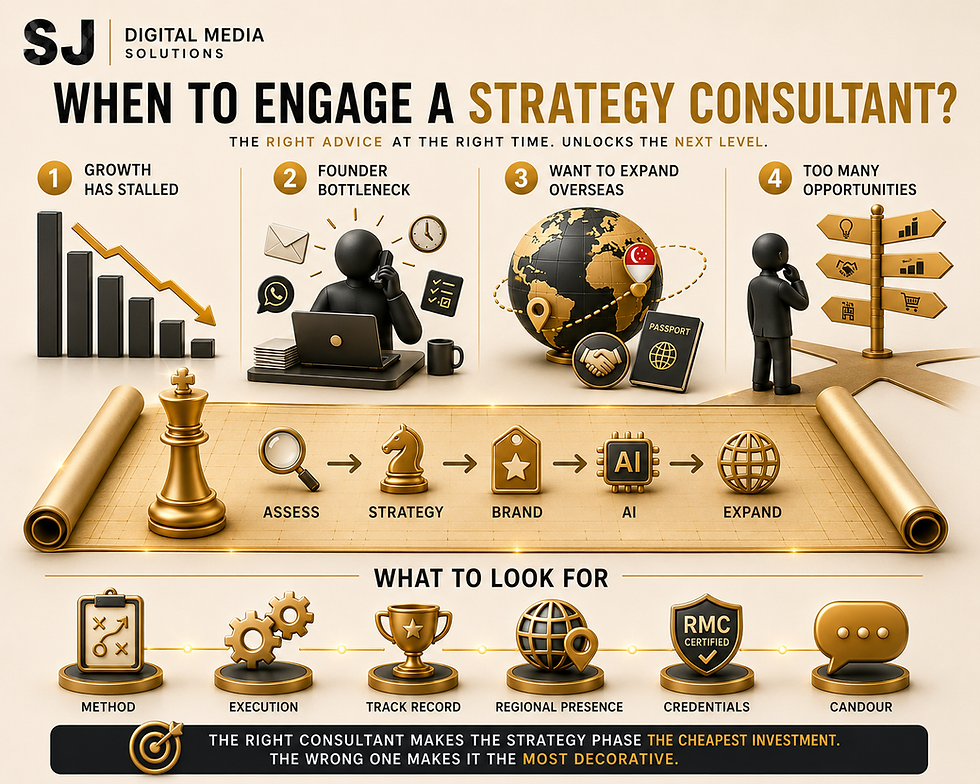
This is why business-first scalability anchors the SJ Digital Media Solutions methodology: the model is made scalable, through strategy, workflow redesign and AI integration, before expansion begins, so that growth abroad compounds rather than collapses.


Comments